
Turning your head, looking upwards or walking through a busy room can feel unsettling when you are dizzy. To understand the chiropractic approach, it helps to look at how your body creates a sense of orientation and what information the neck contributes.
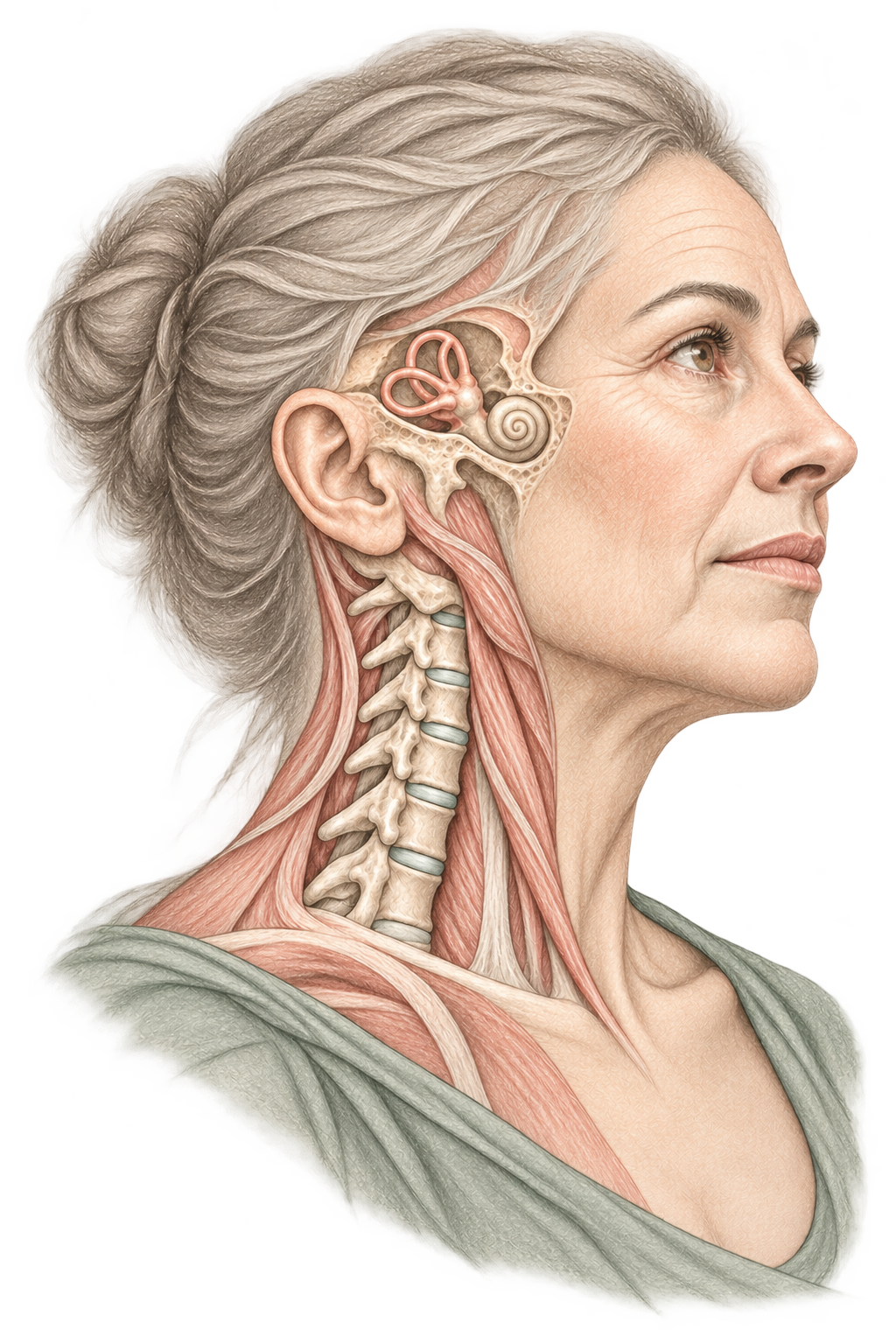
What is dizziness?
Dizziness covers several experiences. The room may seem to spin, the ground may feel as if it is moving, or you may feel unsteady while walking. Different processes can produce these sensations. The word describes an experience before it identifies a cause.
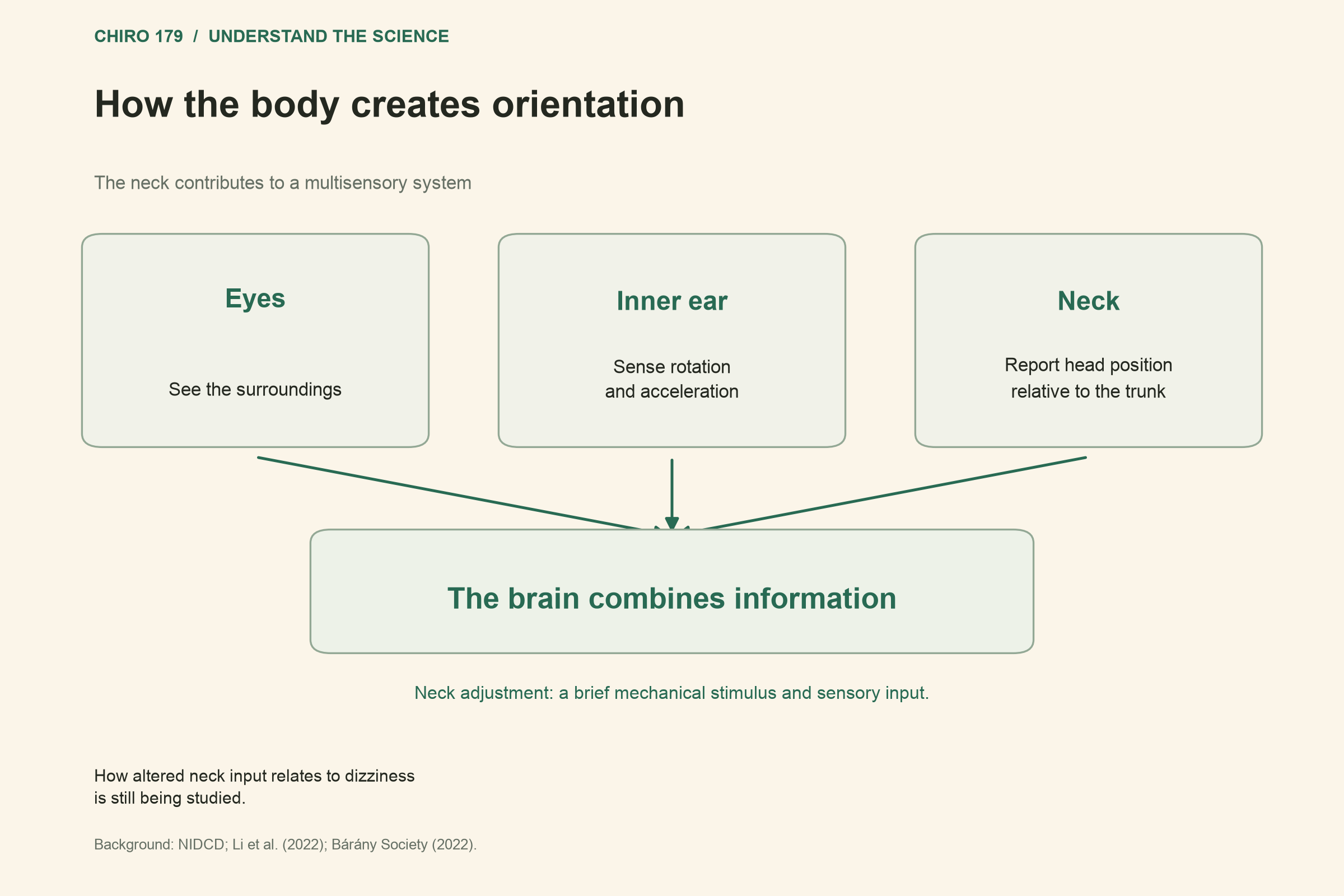
To keep your gaze steady and your body balanced, the brain combines several sources of information. Your eyes show the surroundings. The balance organs in the inner ear detect rotation and acceleration. Sensors in muscles and joints report body position. Together, these signals create a continuously updated picture of movement. [1]
What your neck tells the brain
Your eyes and inner ears move with your head. To understand where the head sits in relation to the trunk, the brain also needs information from the neck. Neck muscles contain sensors that report changes in muscle length and movement. This automatic sense of position is called proprioception.
Imagine sitting on a chair and looking to your right. Your head turns while your trunk remains fairly still. Neck signals help the nervous system interpret that movement. This makes the neck an interesting part of spatial orientation. [2]
When dizziness occurs alongside neck pain, researchers discuss whether altered neck input might contribute to a mismatch between sensory signals. How altered neck input relates to dizziness is still being studied. [3]
How an adjustment acts on the neck
An adjustment applies a brief mechanical impulse to an examined joint. This moves tissues and generates sensory signals. Researchers study how such input affects the processing of body information and muscle control. [4]
When dizziness and neck pain occur together, chiropractic care focuses on neck function. How freely can the head move? How sensitive is the area? Does position sense change? More comfortable neck movement can itself be valuable in daily life.
An adjustment improving the long-term coordination of inner-ear, visual and neck signals remains a proposed pathway. Whether someone improves clinically and why they improve are different research questions. Keeping those questions separate makes the findings easier to understand.
What matters in everyday movement
Looking over your shoulder, walking outside and reading involve different head movements. Useful measures of progress include your sense of steadiness, neck movement and the pattern of symptoms over time. The practical goal is greater confidence in familiar activities.
Chiropractic care considers the neck and its sensory role. The relationship between movement and body awareness helps explain the focus on neck function when neck symptoms accompany dizziness.
What studies show
Less dizziness in a controlled treatment comparison
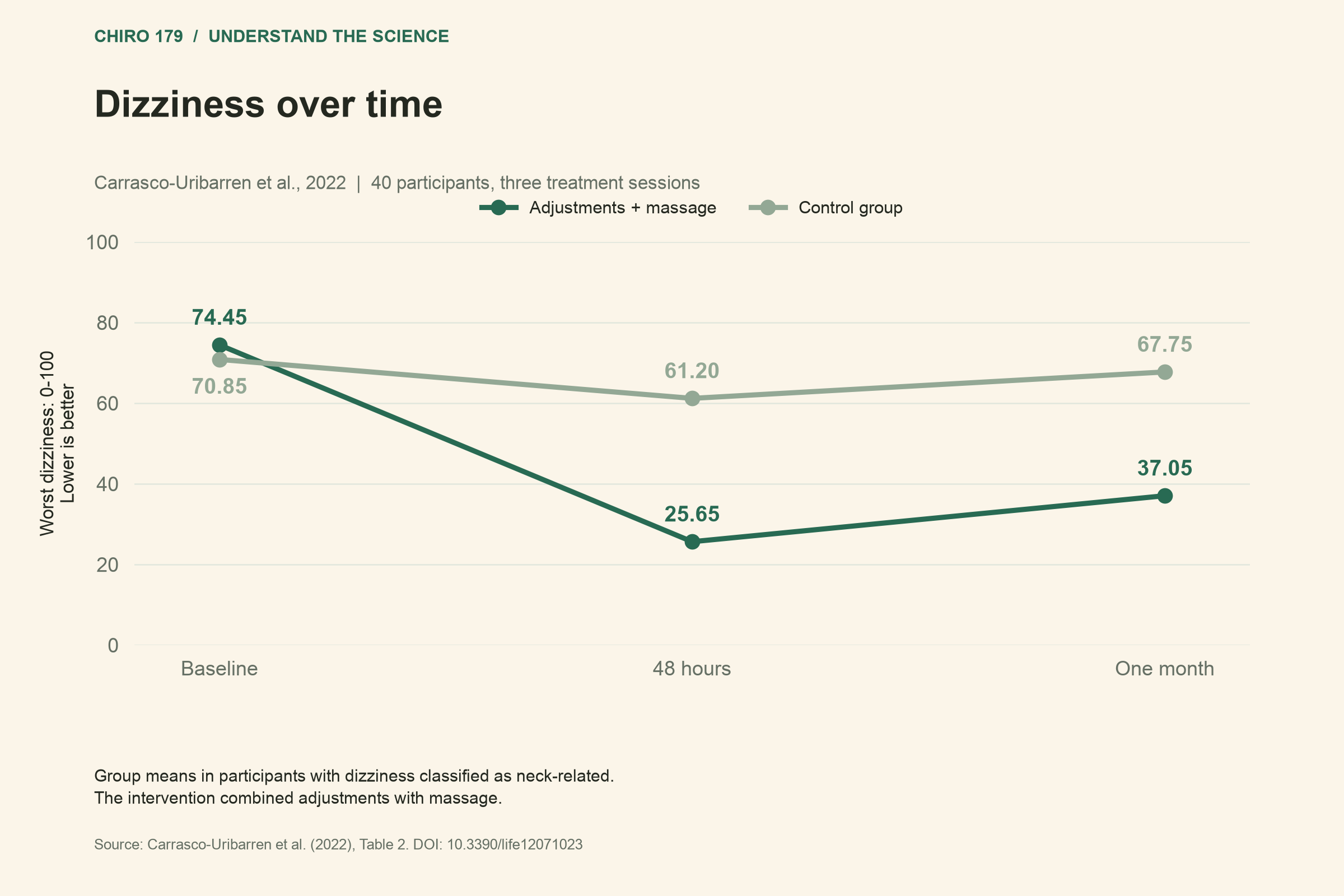
A randomized trial involving 40 people with dizziness classified as neck-related examined three sessions of adjustments and massage. Mean worst-dizziness scores fell from 74.45 to 25.65 out of 100 after 48 hours; control scores changed from 70.85 to 61.20. At one month, scores were 37.05 and 67.75. [5]
Position sense and balance as research questions
An observational study of 25 participants examined changes in neck position sense and mobility after adjustments. It informs research on body awareness but does not establish a treatment effect on dizziness. [6]
A chiropractic pilot study with 19 participants completing follow-up also examined balance tests in older people with neck symptoms. These studies add useful questions; controlled trials remain essential for firm conclusions about treatment benefit. [7]
Understand your neck and your movement
At CHIRO 179 in Korntal and Böblingen, we discuss when unsteadiness occurs and how your neck is involved in movement. Book an appointment to explore your neck function and the chiropractic approach. Share this article with someone interested in how the neck contributes to orientation.
Related guides
Knee pain on stairs: how the spine, pelvis and muscle control play a part · Chiropractic care and muscle strength: how the nervous system, control and reaction work together
Sources and studies
- NIDCD: Balance and dizziness
- Li et al., 2022: Model of altered neck input in dizziness
- Bárány Society, 2022: Position on cervical dizziness
- Pickar & Bolton, 2012: Mechanical input and sensory activation
- Carrasco-Uribarren et al., 2022: Dizziness after adjustment with massage
- Ambalavanar et al., 2025: Neck position sense and mobility
- Strunk & Hawk, 2009: Balance in a chiropractic pilot study